What actually makes a food high-protein and low-calorie?
Protein has about 4 calories per gram. [1] So a food that's naturally lean can hand you a lot of protein without dragging along a lot of calories, because it isn't also loaded with fat.
Shrimp, white fish, egg whites, and skinless chicken breast are good examples: plenty of protein, not many calories. Nuts, seeds, and fatty fish sit on the other end. They cost more calories because they also carry real amounts of dietary fat, and that fat isn't a flaw. It's just a different nutritional profile.
Protein density is a useful lens for comparing foods, but it shouldn't be the only one you use.
Best high-protein, low-calorie foods
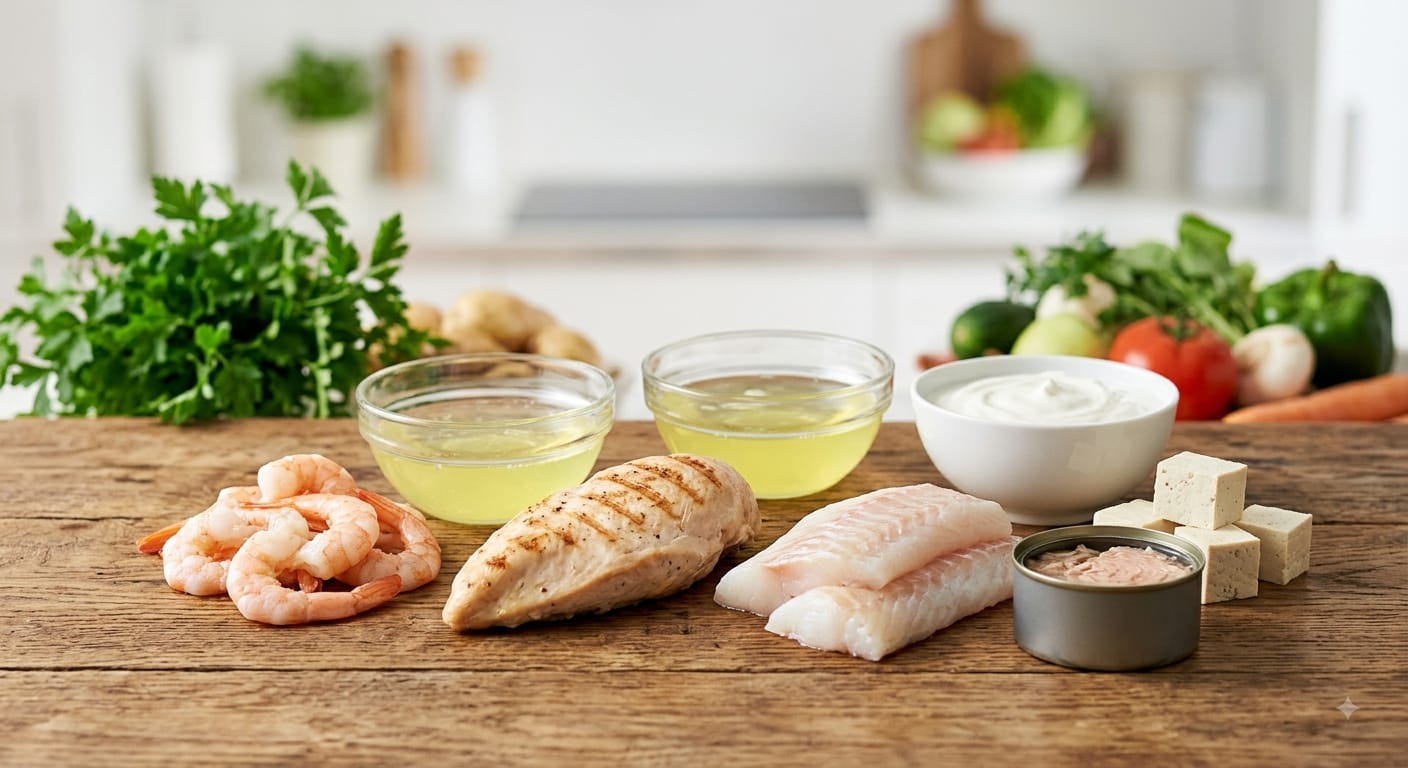
These are common go-tos when you want more protein without a big calorie hit. The numbers below are approximate; they'll shift depending on the exact product, brand, cooking method, and how much water the food holds. [1]
| Food | Calories per 100g | Protein per 100g | Why it works |
|---|
| Egg whites | ~50–55 kcal | ~10–11 g | Very lean, high-quality protein |
| Skinless chicken breast, roasted | ~165 kcal | ~30–31 g | High protein, little fat |
| Cod, cooked | ~90–105 kcal | ~20–23 g | Lean fish, strong protein-to-calorie ratio |
| Shrimp, cooked | ~95–105 kcal | ~20–25 g | Extremely protein-dense |
| Plain nonfat Greek yogurt | ~55–65 kcal | ~9–11 g | Convenient, protein-rich dairy |
| Low-fat cottage cheese | ~70–100 kcal | ~11–13 g | Versatile and protein-rich |
| Canned light tuna in water, drained | ~110–120 kcal | ~24–26 g | Easy, lean protein |
| Firm tofu | ~80–145 kcal | ~9–18 g | Plant protein, calories vary by type |
| Seitan | ~120–150 kcal | ~20–25 g | Very protein-dense meat substitute |
| Edamame, cooked | ~120–125 kcal | ~11–12 g | Protein plus fiber and unsaturated fat |
Treat these as ballpark figures, not fixed values. USDA FoodData Central lists multiple entries for the same food at different preparation states, so the exact numbers you find can vary from what's here. [1]
How to actually compare protein density
Instead of protein per 100 grams, try protein per 100 calories. A food with 20 grams of protein and 100 calories is giving you a lot more protein per calorie than one with the same 20 grams packed into 300 calories.
That said, a higher ratio doesn't automatically make a food better for you. Nuts, seeds, whole grains, legumes, and fatty fish often cost more calories per gram of protein, and they're still nutritionally valuable. What's "best" really comes down to the rest of your diet and what you need from it.
Why high-protein foods help with weight management
Higher-protein eating can support weight management in a few overlapping ways: it tends to increase fullness, it costs more energy to digest, and it helps protect lean tissue when intake is adequate. [2][3][4] None of that makes protein a magic fix, though. You still need an appropriate calorie balance to lose body fat.
Protein and appetite
Protein tends to increase fullness and dial down hunger compared with lower-protein meals. [2] Some research has linked protein intake to shifts in appetite-regulating hormones like ghrelin and GLP-1, though the response depends on the type and amount of protein and what else is on the plate. [2] It's more accurate to say protein can boost satiety than to claim every high-protein meal produces the same hormonal effect. Still, for someone watching calories, building meals around lean protein tends to make staying satisfied between meals easier.
The thermic effect of protein
Digesting, absorbing, and metabolizing food costs energy. That's the thermic effect of food, and protein has the highest one of the three macronutrients. Rough estimates put protein at 20–30% of its own calories burned just processing it, versus roughly 5–10% for carbs and 0–3% for fat. [4]
That doesn't mean 100 calories of protein magically turns into 70–80 usable calories. It means your body spends more energy handling protein than it does handling an equivalent amount of carbs or fat, and how much varies by meal, protein source, overall diet, and the person eating it.
Protecting lean mass
During a calorie deficit, eating enough protein, especially alongside resistance training, helps hold onto lean tissue. Protein supplies the amino acids (leucine among them) that trigger muscle protein synthesis. [3][6]

But protein by itself won't guarantee you keep your muscle. That depends on total protein intake, whether you're lifting, how large and how long the deficit runs, your age, your starting body composition, your training history, and the overall quality of your diet. Research on resistance-trained adults backs adequate protein as one piece of a broader strategy, not a standalone solution. [3]
Best animal-based options
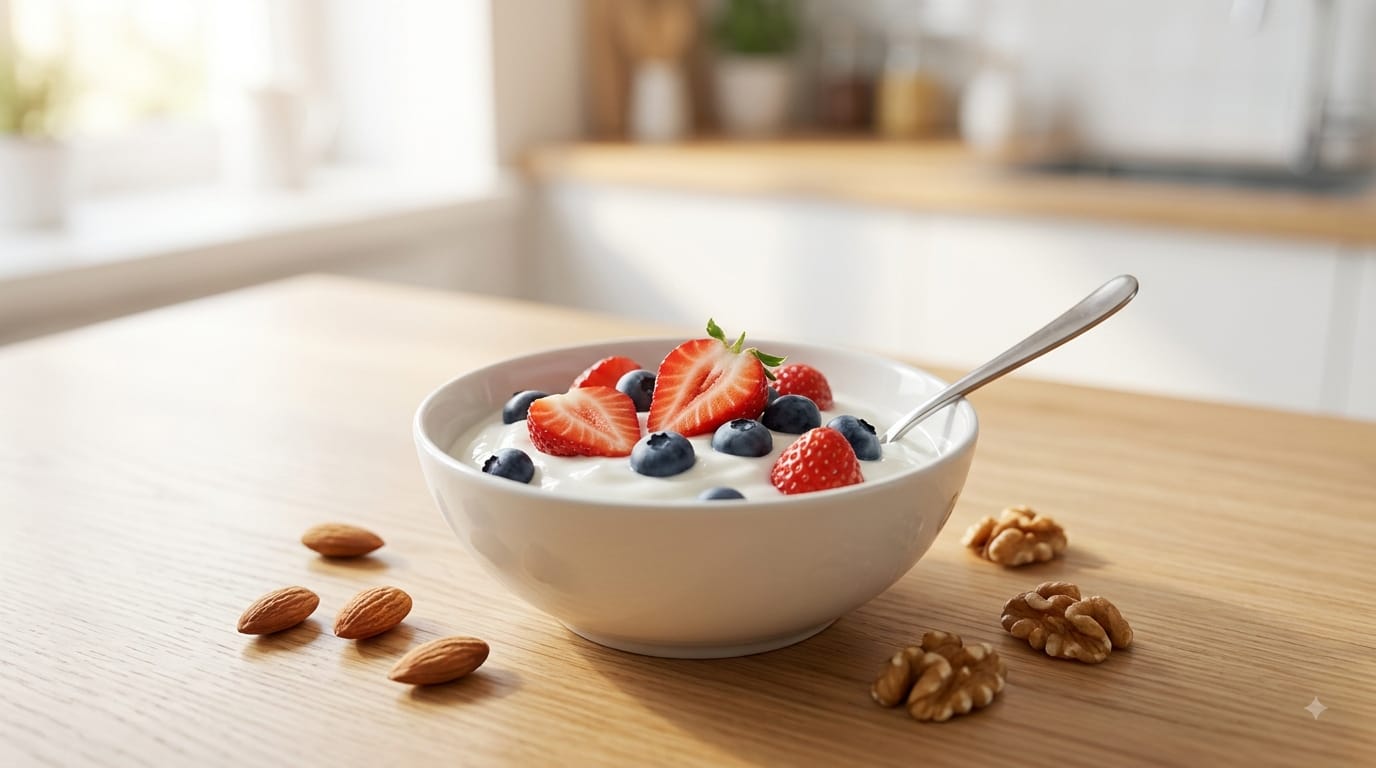
Animal foods tend to offer highly digestible protein, and they can be especially protein-dense when they're naturally low in fat. [1]
Egg whites are about as lean as protein gets. [1] They're mostly water and protein, since almost all the fat in an egg sits in the yolk. That said, whole eggs aren't something to avoid by default. The yolk carries choline and fat-soluble vitamins, so whether you reach for whites or whole eggs depends on what you need from your diet overall.
Skinless chicken breast is the classic pick for calorie-controlled eating. [1] A typical cooked portion runs around 30 grams of protein per 100 grams while staying fairly low in fat, and it also brings niacin, vitamin B6, selenium, and phosphorus. The catch is preparation: frying it, or dousing it in oil, butter, or creamy sauce, undoes a lot of the calorie efficiency.
Turkey breast, skinless and without added oil, behaves a lot like chicken breast: solid protein, not much fat. It works in salads, sandwiches, wraps, or bowls.
Cod and other lean white fish (haddock, pollock, and similar) are naturally lean and provide a lot of protein for relatively few calories. [1] They also bring selenium, vitamin B12, and phosphorus. Not every fish fits this mold; salmon and other fatty fish carry more calories because of their fat content, though that fat includes valuable omega-3s.
Shrimp is another protein-dense seafood option, usually around 20–25 grams of protein per 100 grams cooked, with relatively little fat. [1] Steaming, boiling, grilling, or baking keeps it lean; breading or frying it, or drowning it in sauce, changes that quickly.
Canned tuna in water is convenient and lean, and it works in salads, sandwiches, wraps, or grain bowls. [1] Species, sodium content, and serving size vary between products, so it's worth checking the label. It's also smart not to rely on tuna as your only seafood.
Plain nonfat Greek yogurt is a straightforward, protein-rich dairy option. [1] Straining removes some of the liquid whey and concentrates what's left, which raises the protein content compared with regular yogurt. It still contains both casein and whey, not just one or the other. For fewer calories, plain nonfat versions beat the sweetened, flavored kinds.
Cottage cheese (low-fat or fat-free) delivers a decent amount of protein for a modest calorie cost. [1] Most of its protein is casein, which digests slowly. It works as a snack, a breakfast staple, or an ingredient in savory dishes. Sodium content varies quite a bit between brands, so check the label if that's a concern.
Best plant-based options
Plant foods can absolutely deliver real protein, though how protein-dense they are varies a lot from one to the next. Some carry a fair bit of fiber and carbs alongside their protein; others are much more concentrated.
Seitan, made mostly from wheat gluten, packs a lot of protein per calorie, which makes it a strong pick for anyone looking for a meat substitute with a high protein-to-calorie ratio. [1] One downside: wheat gluten is relatively low in lysine compared with animal protein or soy, so pairing it with beans, lentils, or other legumes fills that gap. Anyone with celiac disease or a diagnosed gluten disorder should skip seitan entirely, since it's essentially pure wheat gluten.
Tofu, made from soybeans, offers high-quality plant protein, though its calorie and protein content shifts a lot depending on whether it's soft, firm, extra-firm, or packed in water. [1] Unlike very lean animal proteins, tofu naturally carries some fat, mostly unsaturated. For lower-calorie meals, baking or grilling it, or cooking it with just a little oil, keeps things efficient.
Tempeh, a fermented soy food with a firmer bite than tofu, tends to run higher in calories because it holds onto more of the soybean's fat and nutrients. [1] It's still an excellent protein source, particularly for people eating plant-based.
Edamame (young soybeans) brings protein along with fiber, carbs, and unsaturated fat. [1] Because it carries more carbs and fat than something like egg whites or white fish, it's not as protein-dense calorie for calorie. Still, the fiber-protein combination makes it a solid addition to a lot of meals.
Lupini beans, relatively protein-rich as legumes go, provide meaningful protein along with fiber. [1] They're not as calorie-efficient as very lean animal protein, but they're a genuinely useful addition to a plant-based diet.
How much protein do you actually need?
There's no single number that fits everyone. The RDA for generally healthy adults is about 0.8 grams of protein per kilogram of body weight per day. People who exercise regularly, older adults, and anyone trying to hold onto muscle during a calorie deficit often need more than that.
For active adults, studied intakes commonly land around 1.2–1.6 g/kg/day. [6] For resistance-trained people cutting fat, sports-nutrition research has suggested ranges up to roughly 1.6–2.4 g/kg/day in some cases, though the right number depends on how big the deficit is, training status, and body composition. [6]
Some studies on lean, resistance-trained athletes in a serious calorie deficit set protein targets against fat-free mass rather than total body weight. Those numbers shouldn't be treated as a general recommendation for anyone trying to lose weight; they're specific to a fairly narrow population.
Your own number depends on your body size, age, training, health, calorie intake, and overall eating pattern.
Does protein need to be spread across the day?
Spreading protein across multiple meals is a reasonable strategy, especially if you're trying to support muscle protein synthesis. Some research points to roughly 0.4 g/kg of protein per meal as a useful target when protein is spread out, but there's no hard rule that the body can only use a fixed amount from one sitting. [5] The digestive system can handle a lot more than 25 or 40 grams at once, and amino acids get put to use in plenty of ways beyond muscle building.
For most people, the practical order of operations is: hit your total daily protein target first, then figure out how to spread it across meals in a way that fits your schedule.
How cooking changes the numbers
Cooking shifts a food's apparent protein and calorie concentration because water gets gained or lost along the way. [1] A hundred grams of cooked chicken isn't the same as a hundred grams of raw chicken, because cooking changes its water content.
What you add matters too. Baking, grilling, steaming, poaching, boiling, and air-frying with little or no oil tend to keep calories in check. Frying, or cooking with a heavy hand on oil or butter, adds calories fast, since fat runs about 9 calories per gram. [1] The food itself might still be protein-rich; the finished dish just stops being calorie-efficient.
Are protein powders better than whole foods?
Not automatically, no. Whey, casein, and plant-based protein powders are genuinely useful when getting enough protein from regular meals is inconvenient, and they can deliver a lot of protein for relatively few calories, depending on the product. But whole foods bring things powders don't: extra nutrients, more volume, chewing, fiber. A reasonable approach is to use powders when they're convenient while still building most of your diet around whole, nutrient-dense foods.
Safety considerations
Most healthy adults tolerate higher protein intake just fine, but a few situations call for caution.
Kidney disease. People with chronic kidney disease shouldn't apply high-protein recommendations meant for healthy adults or athletes. The 2024 KDIGO clinical practice guideline recommends keeping protein around 0.8 g/kg/day for adults with CKD stages G3–G5, and advises against protein intakes above 1.3 g/kg/day for those at risk of disease progression. [7] Anyone with kidney disease or reduced kidney function should talk to a physician or dietitian before changing their protein intake, rather than borrowing numbers meant for athletes.
Hydration. Staying hydrated matters, but there's no fixed rule that says water intake has to rise in lockstep with protein. Fluid needs depend on body size, activity level, climate, how much you sweat, health conditions, and overall diet. People training hard or living somewhere hot generally need more fluid than someone who's mostly sedentary.

Don't cut fat or carbs to zero. Choosing lean protein doesn't mean eliminating fat or carbohydrates. Healthy fats supply essential fatty acids and help you absorb fat-soluble vitamins. Carb-rich foods bring fiber, vitamins, minerals, and fuel for physical activity. A well-balanced, calorie-controlled diet still needs protein, fat, carbs, and micronutrient-rich foods working together.
Frequently asked questions
What's the single best high-protein, low-calorie food? There isn't one that's best for everyone. Egg whites, shrimp, white fish, skinless chicken breast, tuna in water, and some low-fat dairy products all deliver a lot of protein for relatively few calories. Which one makes sense for you depends on your needs, preferences, budget, and the rest of your diet.
Which foods pack the most protein into the fewest calories? Among whole foods, very lean seafood, egg whites, skinless poultry, and certain low-fat dairy products tend to top the list. Protein powders can beat all of them on density, but they're best thought of as a convenient supplement rather than a replacement for a varied diet.
Can high-protein foods actually help with weight loss? As part of a calorie-controlled diet, yes. Higher protein intake tends to increase fullness and costs more energy to process than carbs or fat, and adequate protein helps protect lean mass during weight loss, especially alongside resistance training. [2][3][4] Total calorie intake still drives whether you lose body fat.
Is chicken breast better than salmon for weight loss? Not necessarily. Chicken breast gives you more protein per calorie because it has less fat. [1] Salmon costs more calories but delivers beneficial unsaturated fats, including long-chain omega-3s. If your goal is maximizing protein while minimizing calories, chicken breast is the more efficient choice. If you're after dietary variety and broader nutrient intake, both have a place.
Can you eat too much protein in one meal? There's no simple gram ceiling where your body just stops absorbing protein. Muscle protein synthesis does seem to plateau after a certain amount in one sitting, but the extra protein isn't wasted. [5] It gets used for energy and other tissues and processes. For muscle-focused eating, spreading protein across meals is a reasonable strategy, but hitting your total daily target still matters most.
Are egg whites healthier than whole eggs? Not simply, no. Egg whites are lower in calories and fat while still delivering protein. Whole eggs include the yolk, which carries choline and fat-soluble vitamins. [1] Which one makes more sense depends on your calorie needs and the rest of your diet.
Is tofu low in calories? It can be, but its calorie and protein content varies a lot by type. Firm and extra-firm tofu generally run higher in calories than softer varieties because they hold less water and pack in more concentrated nutrients. Checking the label for the specific product you're buying is the most reliable way to know.
How much protein should I eat while trying to lose weight? It depends on your body weight, age, activity level, whether you're lifting, the size of your deficit, and your body composition. The general adult RDA is 0.8 g/kg/day, though people who exercise regularly or are trying to preserve muscle during a deficit often benefit from more. Anyone with kidney disease or another relevant medical condition should get individualized advice rather than following athletic guidelines by default.
References
- U.S. Department of Agriculture, Agricultural Research Service. FoodData Central.
- Leidy HJ, et al. The Role of Protein in Weight Loss and Maintenance. American Journal of Clinical Nutrition. 2015;101(6):1320S–1329S.
- Morton RW, et al. A Systematic Review, Meta-Analysis and Meta-Regression of the Effect of Protein Supplementation on Resistance Training-Induced Gains in Muscle Mass and Strength in Healthy Adults. British Journal of Sports Medicine. 2018;52(6):376–384.
- Westerterp KR. Diet Induced Thermogenesis. Nutrition & Metabolism. 2004;1:5.
- Schoenfeld BJ, Aragon AA. How Much Protein Can the Body Use in a Single Meal for Muscle-Building? Implications for Daily Protein Distribution. Journal of the International Society of Sports Nutrition. 2018;15:10.
- Murphy CH, Hector AJ, Phillips SM. Considerations for Protein Intake in Managing Weight Loss in Athletes. European Journal of Sport Science. 2015;15:21–28.
- KDIGO. 2024 Clinical Practice Guideline for the Evaluation and Management of Chronic Kidney Disease.
Comments
Log in to leave a comment.